
Technical Portfolio
High-Performance Solvent Quality Verification
AGT Labs provides professional Acetone Testing Services to verify purity, water content, and acidity for high-performance solvents. Our Houston-based laboratory specializes in testing acetone for use as a chemical intermediate, solvent, and cleaning agent, ensuring compliance with strict ASTM D329 specifications.
Our Acetone Testing Services support chemical manufacturers, pharmaceutical companies, and distributors with accredited technical data. Whether verifying feedstock quality for Methyl Methacrylate (MMA) production or ensuring safe use in electronics cleaning, we offer the precise results needed to prevent process contamination and ensure product performance.
Accredited Acetone Analysis Highlights
- Purity by Gas Chromatography (ASTM D329/GC)
- Water Content by Karl Fischer (ASTM E1064)
- Permanganate Time for Reducibles (ASTM D1363)
- Acidity as Acetic Acid (ASTM D1613)
- Specific Gravity & Density (ASTM D4052)
- Non-Volatile Matter (ASTM D1353)
- Color Pt-Co Scale (ASTM D1209)
- Distillation Range (ASTM D1078)
Key Technical Parameters for Acetone Quality
Accredited analysis supporting our Acetone Testing Services suite for industrial and chemical applications.
Purity (GC)
ASTM D329Water Content
ASTM E1064Acidity
ASTM D1613Permanganate Time
ASTM D1363Specific Gravity
ASTM D4052Non-Volatile Matter
ASTM D1353Color (Pt-Co)
ASTM D1209Distillation Range
ASTM D1078Methanol Content
GC AnalysisAlkalinity
ASTM D1614Appearance
VisualSolubility in Water
ASTM D1722Industries We Serve
Providing specialized purity data across chemical and industrial sectors utilizing our accredited Acetone Testing Services.
Paints & Coatings
Verifying acetone quality as a primary solvent for thinners and reducers in industrial coating applications.
Chemical Manufacturing
Testing feedstock purity for the production of Methyl Methacrylate (MMA), Bisphenol A (BPA), and other intermediates.
Pharmaceuticals
Ensuring high-purity solvent quality for extraction, purification, and synthesis processes in drug manufacturing.
Cosmetics & Personal Care
Analyzing acetone used in nail polish removers and other personal care products for safety and efficacy.
Electronics Manufacturing
Verifying ultra-pure acetone for cleaning and degreasing sensitive electronic components and circuit boards.
Adhesives & Sealants
Testing solvent consistency to ensure proper bonding strength and evaporation rates in industrial adhesives.
Laboratory Capabilities
Analytical Systems
Our Acetone Testing Services utilize advanced Gas Chromatography (GC) for purity profiling, automated titrators for acidity and water content, and precision density meters. We maintain strict calibration standards to detect trace impurities.
Advanced Technical Support
- ISO/IEC 17025 Accredited Laboratory Operations
- ASTM D329 Specification Testing
- Rapid Turnaround for Production & Logistics
- Contaminant Identification & Troubleshooting
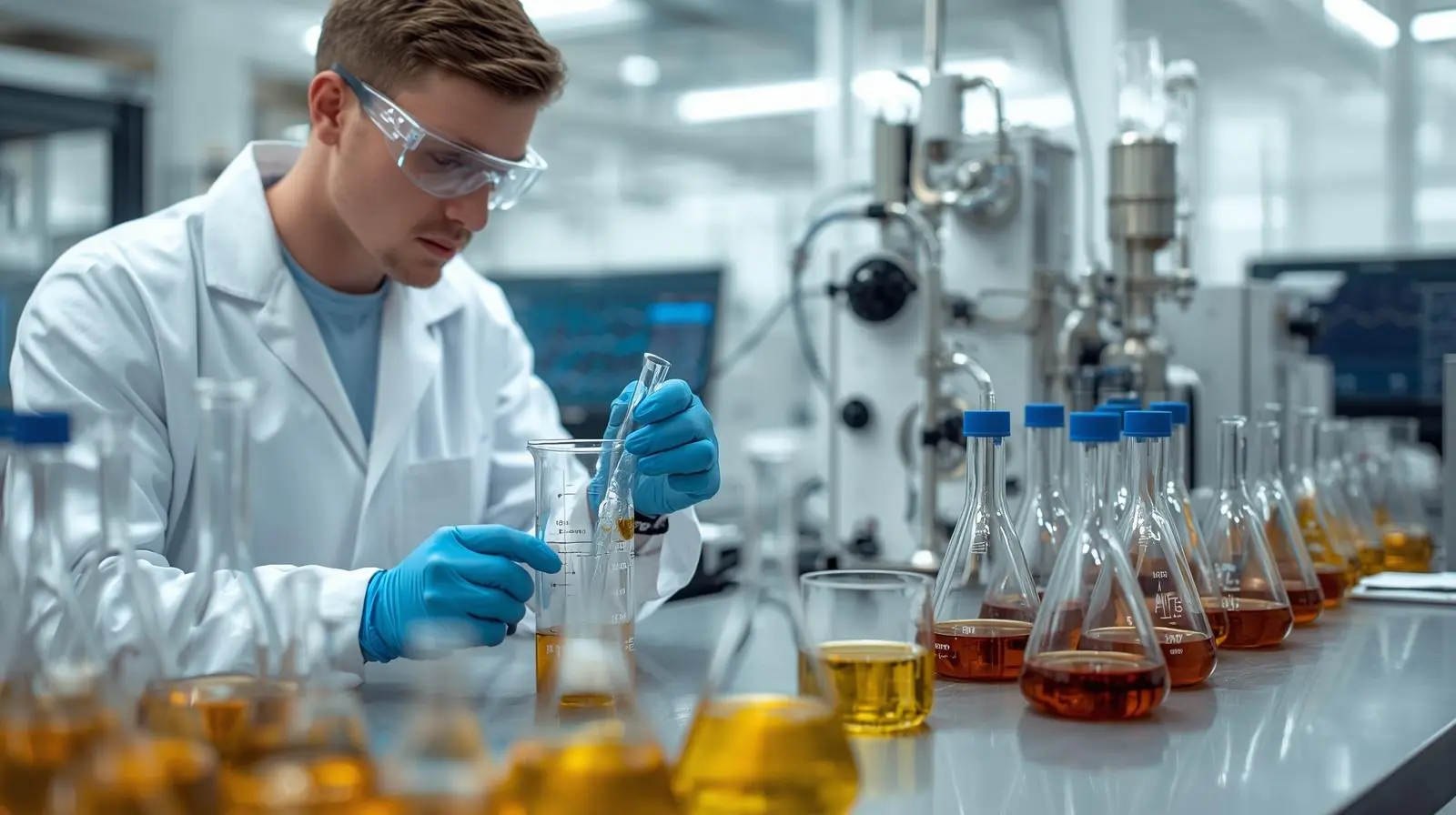
Sampling, Handling & Chain of Custody
Reliable Acetone Testing Services depend on careful sampling to prevent evaporation and contamination. We provide specialized clean glass containers and technical guidance for proper sample collection.
Download Chain of Custody FormContainers & Handling
- Use clean, dry glass or stainless steel containers; avoid plastics that may dissolve.
- Minimize headspace to prevent loss of volatile components.
- Flush sampling lines thoroughly to ensure representative fluid collection.
Transport & Logistics
- Label clearly with Batch ID, Application, and Date.
- Ship immediately to our Houston lab; expedited options available.
- Samples tracked via LIMS for complete historical data management.
Quality & Reporting
Reports from our Acetone Testing Services provide definitive quality assurance for industrial and chemical processes.
- COA with full specification limits and analyst verification.
- Secure PDF Delivery via automated client technical portal.
- Comparison against ASTM D329 standards.
- Expert consultation for purity and contamination issues.
Standards & Accreditation
AGT Labs is ISO/IEC 17025 accredited. We perform Acetone Testing Services strictly adhering to ASTM and international trade methodologies.
Ensuring solvent purity through traceable technical data.
Frequently Asked Questions
Why is water content critical in acetone?
What is the Permanganate Time test?
Can you detect other solvents in acetone?
How fast can I get acetone purity results?
Certify Your Acetone Purity
Need reliable accredited Acetone Testing Services for Houston operations? Contact our technical team today for a custom analysis quote.
Contact Technical Specialist