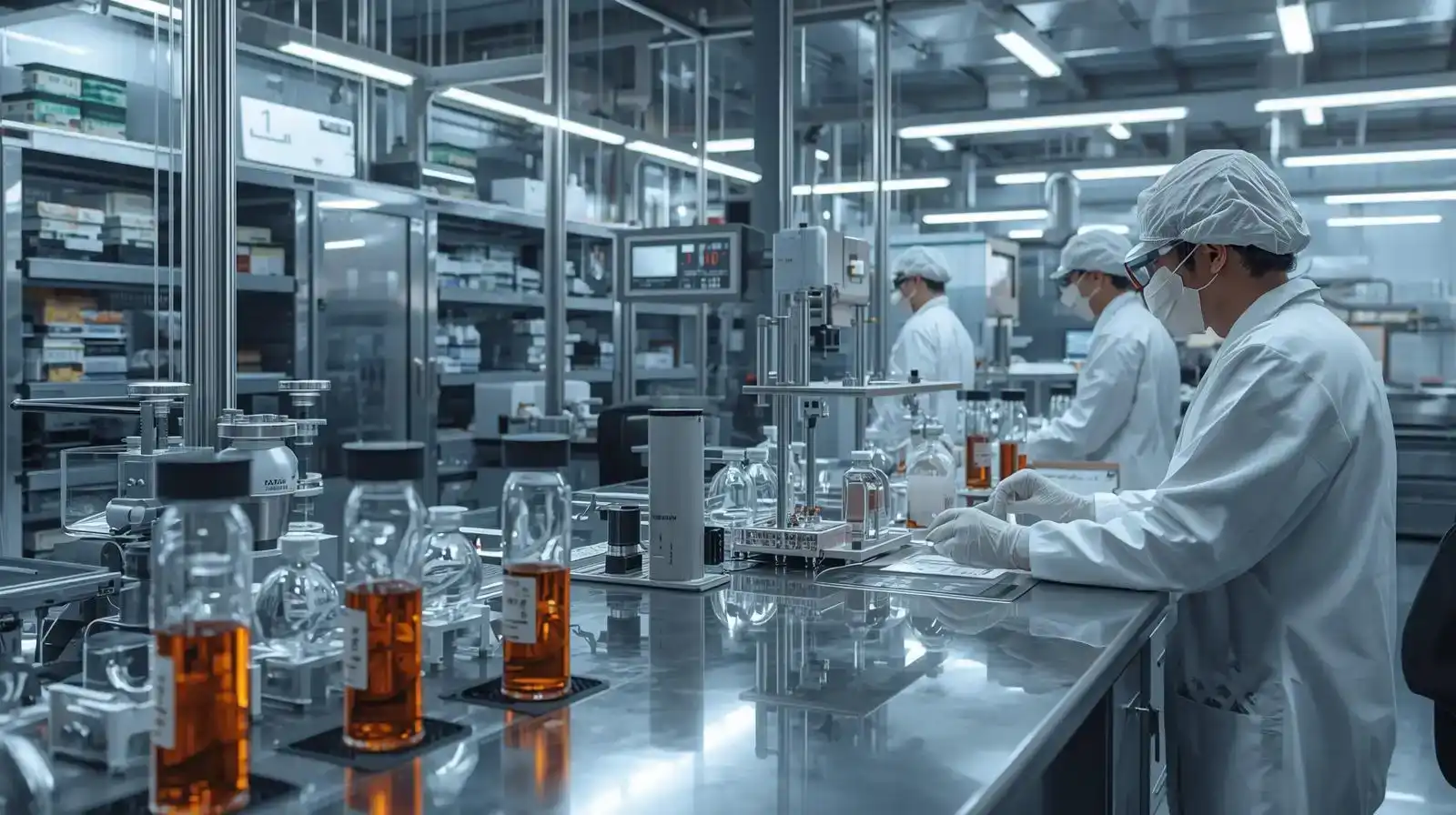
Base Oil Testing — Characterization, Quality and Compliance

Base oil are the primary component of lubricants and greases. AGT Labs provides a comprehensive characterization package across API Groups I–V: color, corrosion tendency, carbon residue, nonvolatile matter, odor evaluation, refractive index, electrical conductivity, hydrocarbon composition and detailed GC-based analysis.

We support producers, blenders, additive houses and QC laboratories by verifying raw material quality, confirming API group classification, detecting contamination or mis-blending, and carrying out compatibility checks with additive concentrates. Our data supports supply acceptance, blend formulation and failure investigations.

Who benefits: base oil producers, lubricant manufacturers, additive formulators, MROs, and quality control laboratories.

Service Highlights

  • API Group classification (I–V) and detailed physical property profile (color, corrosion behavior, carbon residue, nonvolatile residue,).
  • Contamination screening: water, insolubles, metals (ICP), and trace heteroatoms (S, N, Cl).
  • Compatibility checks with additive packages and blend validation; forensic trace-element fingerprinting for supplier disputes.

Industries We Serve

  • Base Oil Producers — production QC, hydrotreating verification and product release testing.
  • Lubricant & Grease Manufacturers — incoming raw material checks and blend validation.
  • Additive Houses — compatibility testing and concentrate evaluation.
  • OEMs, MROs & QC Labs — vendor qualification and failure analysis support.

Detailed Test Matrix

Below are commonly requested tests for base oil with reference methods, typical instrumentation, notes/LOD, minimum sample volume and typical turnaround time.

Test / Parameter Reference Method(s) Typical Instrument / Technique LOD / Notes (expanded) Typical TAT
Color (Platinum–Cobalt Scale) ASTM D1209 Visual Color assessment of clear hydrocarbon liquids 24–48 h
Color (Automatic Tristimulus) ASTM D6045 Automatic Colorimeter Precision color measurement for base oil clarity 24–48 h
Copper Strip Corrosion ASTM D130 / D849 / D1838 Visual Detects corrosive sulfur compounds; base oil purity indicator 24–48 h
Ramsbottom Carbon Residue ASTM D524 Gravimetric Determines coke-forming tendencies of petroleum products 48–72 h
Nonvolatile Matter (Halogenated Solvents) ASTM D2109 Gravimetric Residue determination in solvent-contaminated base oils 48–72 h
Nonvolatile Matter (Volatile Solvents) ASTM D1353 Gravimetric Determines residue after evaporation 48–72 h
Odor of Volatile Solvents ASTM D1296 Manual Odor Evaluation Qualitative odor characterization for hydrocarbon purity 24–48 h
Refractive Index ASTM D1218 Refractometer Identifies hydrocarbon type and detects mixing 24–48 h
Electrical Conductivity ASTM D2624 / ASTM D1125 Conductivity Meter ESD-sensitive applications; detects contamination 24–48 h
Hydrocarbon Composition ASTM D2163 GC-FID Detailed light-end hydrocarbon profiling 48–72 h
Note: method selection depends on client spec and required LOQ. Provide target specification or regulatory limits at submission; any deviations are documented on the COA.

Laboratory Capabilities & Instrumentation

Analytical Systems

GC-FID / GC-MS for hydrocarbon profiling and aromatics; ICP-OES / ICP-MS for trace elements; Automated viscometers, pour/flash point analyzers, Karl Fischer titration, titrators for TAN and potentiometric endpoints, and bench stability rigs for compatibility testing.

Quality Systems

  • ISO/IEC 17025:2017 accredited testing across many basestock methods (certificate & scope available on request).
  • Traceable calibrations, CRMs, method verification and participation in proficiency testing programs.
  • Documented measurement uncertainty reported when required.
Laboratory instrumentation

Sampling, Handling & Chain of Custody

Representative sampling is essential. AGT Labs supplies sampling kits or accepts client-supplied samples accompanied by a completed Chain of Custody (CoC). Follow these guidelines to preserve sample integrity:

Containers & Handling

  • Use clean amber glass or metal-lined containers; avoid plastic where migration/adsorption is a concern.
  • Minimize headspace for volatile-sensitive tests; seal caps tightly.
  • Label samples with sample ID, product name, batch, sampling point, date/time and sampler name.

Transport & Storage

  • Transport at ambient unless otherwise requested; avoid prolonged exposure to heat.
  • For oxidative-sensitive samples, store cool and test promptly; use inert headspace purge if required.
  • Log sample condition on receipt (temperature, appearance, leaks) and note on CoC.

Download the Sample Submission Guide for container types, labeling templates and shipping instructions.

Quality Assurance, Reporting & Interpretation

Each report includes a Certificate of Analysis (COA) listing methods used, results, units, measurement uncertainty (where applicable), analyst initials and authorized signatory. For deviations or OOS results, we provide interpretive commentary and recommended next steps.

  • COA Contents: Client & sample ID, test methods, results, MU, acceptance criteria if provided, and interpretive comments.
  • Data Delivery: PDFs via secure portal; raw data (CSV, chromatograms) on request.
  • Technical Support: Consultation for blend optimization, supplier disputes and forensic analysis.

Turnaround Times & Test Packages

PackageTypical TestsTypical TAT
Pt–Co Color PackagePlatinum–Cobalt (APHA/Hazen) color determination, clarity check2–3 days
Tristimulus Color PackageAutomated L*, a*, b* color analysis, ΔE comparison3–4 days
Copper Strip Corrosion PackageCopper strip preparation, exposure, rating per ASTM24–48 h
Ramsbottom Carbon Residue PackageCarbon residue determination, volatility behavior3–5 days

Standards & Accreditation

Testing follows recognized standards (ASTM D1209, D6045, D130 / D849 / D1838, D524, D2109, D1353, etc.). AGT Labs is accredited to ISO/IEC 17025:2017 for many methods — full certificate and scope are available on request.

FAQs — Base Oil

What sample volume do you need for a full characterization?
For a full characterization panel we recommend 500–1000 mL to allow repeats and stability trials; many single tests accept 25–100 mL.
Can you classify API groups?
Yes — using saturation/aromatic analysis and distillation/viscosity data we assign API group and advise on performance expectations.
Do you test additive compatibility?
Yes — we perform bench compatibility and accelerated aging with common additive chemistries to screen for precipitation, color change or loss of key properties.

Deliverables & Value-Added Services

  • COA with methods, units, and measurement uncertainty.
  • Interpretive summary and recommended actions for OOS results.
  • Raw data and chromatograms available on request.
  • On-site sampling, technical consultation, and dispute support (by arrangement).

Summary

AGT Labs’ Base Oil Testing provides industry-grade characterization and forensic analysis to support product release, blend design and supplier qualification — delivered with traceable methods and flexible packages to match your needs.

Request a Quote
×

Request a Quote Ready to send samples or need a custom method?

Fill the quick form and our team will contact you within one business day. Prefer to call? Reach our sample intake line below.

Contact Us
Scroll to Top